
On Grid Solar Systems with Net Metering
The most cost-effective way to reduce your electricity bill — a grid-connected solar system that exports surplus power and draws from the grid when you need more.
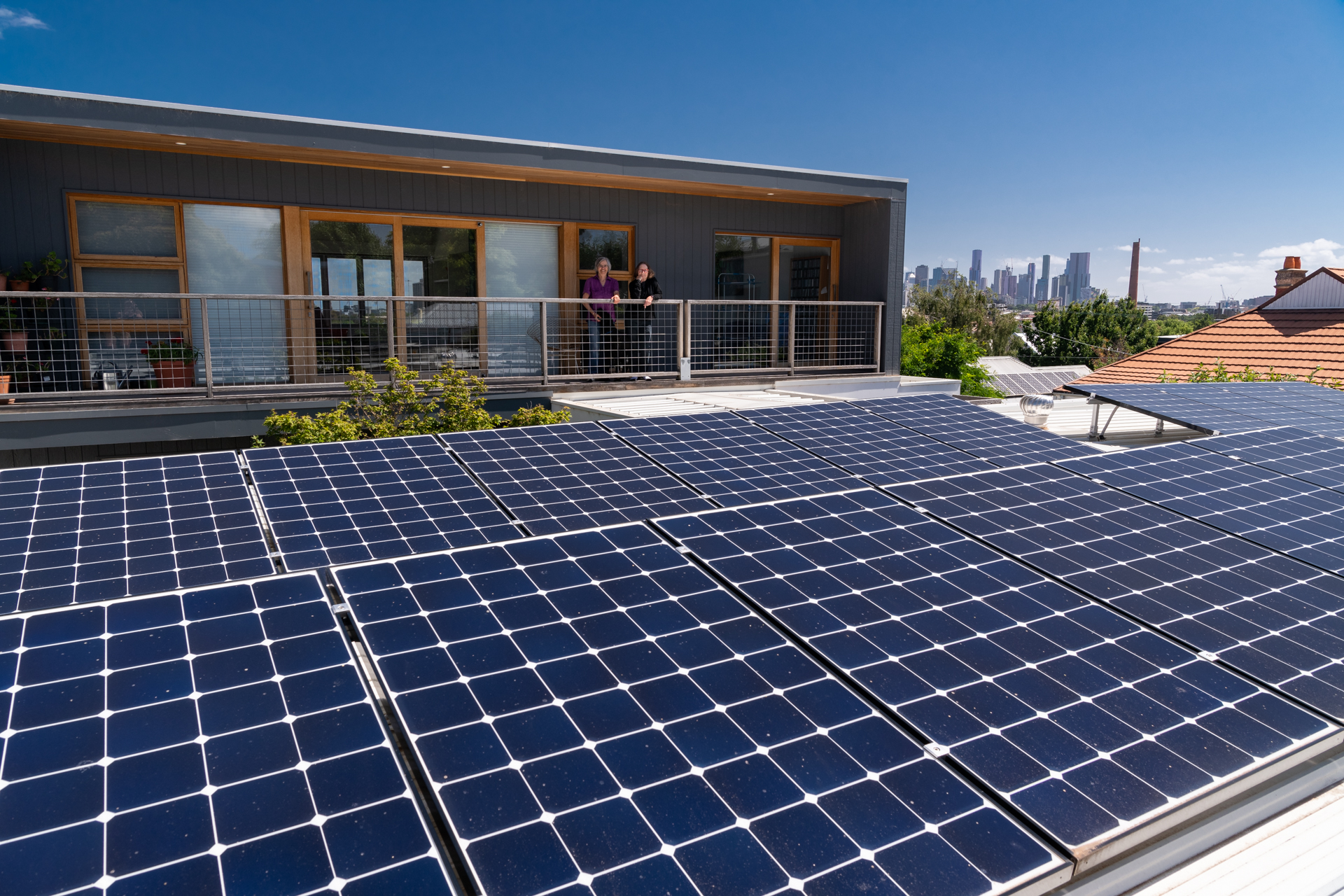
Grid-Connected Solar Without the Cost of a Battery
An on-grid (grid-tied) solar system remains connected to the DISCOM electricity network at all times. It generates power during daylight hours, feeds your home or business first, and exports any surplus back to the grid through a net meter — which effectively lets the grid act as your 'storage' by crediting exported units against what you draw later. Because there is no battery to purchase or maintain, on-grid systems typically have the lowest upfront cost per kW and the simplest maintenance profile of the three system types, making them the default choice for the majority of residential and commercial customers who don't have a specific backup-power requirement.
Who is this solution suitable for?
Key Benefits
Lowest Cost Per kW
No battery expense keeps upfront investment and payback period favourable.
Net Metering Credit
Surplus exported power is credited against future grid consumption.
Simple Maintenance
Fewer components than hybrid or off-grid systems to service.
Fast, Well-Understood Technology
The most widely installed and DISCOM-familiar system category.
How the System Works
- 1 Rooftop panels generate DC electricity, which the grid-tied inverter converts into grid-synchronised AC power.
- 2 Your property consumes this solar power first, reducing the units drawn from the grid in real time.
- 3 Any surplus generation beyond your immediate consumption is exported to the grid through a bi-directional net meter.
- 4 The net meter nets off imported vs. exported units over the billing cycle, reducing your final bill accordingly.
Get a Free Site Assessment
Tell us about your property and our team will call you back.
Available System Capacity
Indicative starting points — final sizing depends on your actual consumption and rooftop or land area.
| System Capacity | Typically Suitable For | Approx. Area Required | Indicative Monthly Generation |
|---|---|---|---|
| 1 kW – 3 kW | Small to mid-size homes | 90 – 270 sq. ft | 120 – 360 units/month |
| 5 kW – 10 kW | Larger homes and small offices | 450 – 900 sq. ft | 600 – 1,200 units/month |
| 10 kW – 50 kW | Shops, offices, small commercial units | 900 – 4,500 sq. ft | 1,200 – 6,000 units/month |
| 50 kW+ | Larger commercial and industrial rooftops | As per site survey | As per system design |
What Goes Into the System
Every installation is built from certified, compatible components sized for your load.
Solar Panels
Mono PERC, TOPCon or bifacial modules based on budget and roof profile.
Grid-Tied Inverter
Synchronises generated power with grid voltage and frequency automatically.
Mounting Structure
Rooftop or ground-mount frame suited to your site.
Bi-Directional Net Meter
Installed by your DISCOM to record import and export separately.
Balance of System
DC/AC cabling, DCDB/ACDB, earthing and lightning protection.
Monitoring
Track daily generation and export performance from your phone.
Suggested Installation Process
A clear, transparent path from enquiry to handover.
Enquiry & Consultation
Discuss your bill, sanctioned load and roof or land availability.
Free Site Survey
Assess shading, roof condition and structural suitability.
System Design & Quote
Right-sized on-grid design with transparent pricing.
Net Metering Application
Support with DISCOM paperwork for net meter approval.
Installation
Mounting, wiring and safety checks by certified technicians.
Inspection & Activation
DISCOM inspection, net meter installation and system activation.
What Affects Your Project Cost
- System capacity and chosen panel/inverter technology
- Roof type and any structural preparation needed
- Net metering application and DISCOM inspection timelines (a process cost more than a product cost)
- Cabling distance between panels, inverter and your meter location
- Applicable subsidy, where the property qualifies
Estimated Savings Potential
On-grid systems are typically the fastest-payback option because there is no battery cost to recover. Savings are strongest when your consumption pattern overlaps with solar generation hours (roughly 9 AM to 4 PM), since self-consumed units offset your bill directly, while exported units are credited under net metering rules that vary by DISCOM.
Use our interactive calculator on the homepage for an indicative estimate based on your own electricity bill and rooftop area.
Calculate Your SavingsSubsidy Applicability
On-grid residential rooftop systems are the category most commonly eligible for the central rooftop solar subsidy scheme, subject to current eligibility rules and DISCOM approval. Commercial and industrial on-grid systems generally do not qualify for this particular scheme — see our Solar Subsidy page for current details.
View Full Subsidy GuideFinance Options
Because on-grid systems have a lower total cost than hybrid or off-grid alternatives, they are often the easiest category to finance through standard solar loans or consumer finance, subject to lender approval.
Explore EMI & FinanceMaintenance Requirements
On-grid systems have the simplest maintenance needs of the three types — periodic panel cleaning and an annual inverter and electrical safety check are typically sufficient to keep performance close to design expectations.
Solar Maintenance PlansIllustrative Project Examples
Representative examples of the scale and outcomes this solution supports.
3 kW Residential On-Grid System
3 kW / On-Grid
A family home offset daytime consumption with net metering credit for surplus generation.
20 kW Commercial On-Grid Rooftop
20 kW / On-Grid
A retail premises reduced daytime lighting and HVAC costs with a grid-tied rooftop array.
7 kW Independent House System
7 kW / On-Grid
A larger household with high summer AC load installed a 7 kW on-grid system.
Why Choose Sarth Solar for On Grid Solar
Net Metering Expertise
We handle DISCOM paperwork and coordination on your behalf.
Subsidy Documentation
Support for eligible residential applications.
Free Site Survey
No-cost assessment before you commit.
Certified Installation
Safety-first installation practices, every time.
Fast After-Sales Service
Local support for maintenance and monitoring queries.
Best Cost-Per-Unit Value
The most economical way to start generating your own power.
Related Solar Solutions
On Grid Solar — Frequently Asked Questions
An on-grid system stays connected to the DISCOM electricity network at all times, generating solar power during the day and drawing from the grid whenever solar output isn't enough.
No. For safety reasons, grid-tied inverters automatically shut down during a grid outage (anti-islanding protection), so an on-grid system alone does not provide backup power.
Net metering is a billing arrangement where surplus solar power you export to the grid is credited against the units you import later, reducing your net bill over the billing cycle.
No — that's the defining feature of an on-grid system. If you want backup during outages, consider our hybrid or off-grid solutions instead.
Generally yes, per installed kW, because there's no battery cost involved, which typically also means a shorter payback period.
Timelines vary by DISCOM and depend on local processes and application volume; our team assists with documentation to help avoid avoidable delays.
Yes, on-grid is a common choice for commercial and industrial customers with reliable grid supply and no specific backup requirement.
This depends on your monthly bill, sanctioned load and available roof area — our site survey and calculator both provide indicative sizing.
Residential on-grid systems are generally the category most likely to be eligible under the central subsidy scheme, subject to current rules — see our Solar Subsidy page.
Enquire About On Grid Solar
Fill in your details — our team typically responds within one business day.